Earth: Olive Growers
The history of the olive tree in Italy is long and fascinating, with roots that go back to ancient times and develop up to modern cultivations. The olive tree (Olea europaea) is a plant that has played a fundamental role in the culture, economy and diet of Italians.
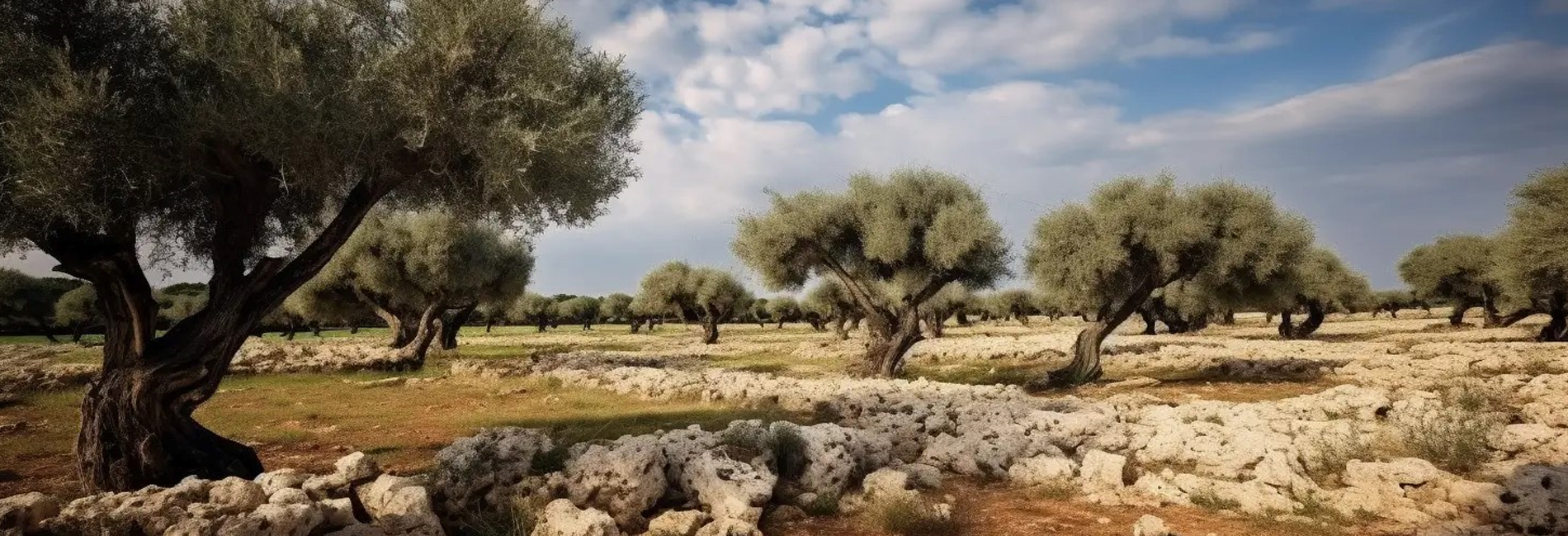
The origins of the olive tree in Italy: from antiquity to the Middle Ages
The olive tree is native to the eastern Mediterranean region, but its spread in Italy occurred thanks to cultural and commercial exchanges with the peoples of the Near East. As early as 3000 BC, the ancient peoples of Mesopotamia and Syria knew about olive oil and used it in various fields. The olive tree arrived in Italy through the Etruscans and the Greeks, who planted it in various territories, especially in the coastal areas of central and southern Italy.
In the 6th century BC, Greek colonization in Sicily, Calabria and other southern regions brought the olive tree and its cultivation systematically. The Romans subsequently improved cultivation, developing techniques for harvesting and producing superior quality olive oil, which became one of the main economic resources.
Middle Ages and Renaissance
During the Middle Ages, olive cultivation spread further thanks to the support of Benedictine and Cistercian nuns and monks, who promoted the plant not only for the production of oil, but also for medicinal and ritual purposes. Olive oil also became an important product for the Church and for the lighting of churches.
In the Renaissance, the olive tree remained a symbol of prosperity and was cultivated on a large scale, especially in the warmest and sunniest areas of Italy, such as Tuscany, Puglia, Liguria and Sicily. Italian noble families and maritime republics (such as Venice and Genoa) increased the production and marketing of olive oil throughout Europe
The Modern Period: The 19th and 20th Centuries
In the 19th century, with the unification of Italy, a period of agricultural modernization began, but olive cultivation remained mostly traditional and centered on small plots. Oil production was still mostly artisanal, but began to be intensified in some areas, such as Puglia, where large olive groves were created. In the 20th century, olive oil continued to be a fundamental resource for Italy, which became one of the main producers in the world. Technological innovations, such as modern olive presses, allowed for more efficient and higher-quality production. However, olive cultivation remained predominantly traditional, and the olive tree was often considered a resistant plant, requiring little maintenance.
Intensive cultivation: the evolution of the 20th century and the future
Starting in the 1950s and with the arrival of agricultural mechanization, intensive olive cultivation began to develop in some areas of Italy (especially in the South), often intended for the production of oil for export. Intensive cultivation is characterized by the adoption of modern techniques, such as the use of varieties suitable for mechanical harvesting, and the arrangement of plants in order to optimize space.
In particular, the use of more productive and resistant cultivars, such as Leccino, has led to the creation of denser olive groves, with greater productivity and a lowering of production costs. However, this model has also raised concerns, as intensive monoculture risks reducing biodiversity and compromising the quality of the oil. With the adoption of more sustainable agricultural practices and the introduction of quality certification (DOP, IGP), many Italian regions have tried to reconcile intensive production with the valorization of quality and tradition. Today, Italy is the leading producer of olive oil in Europe and one of the main ones in the world.